




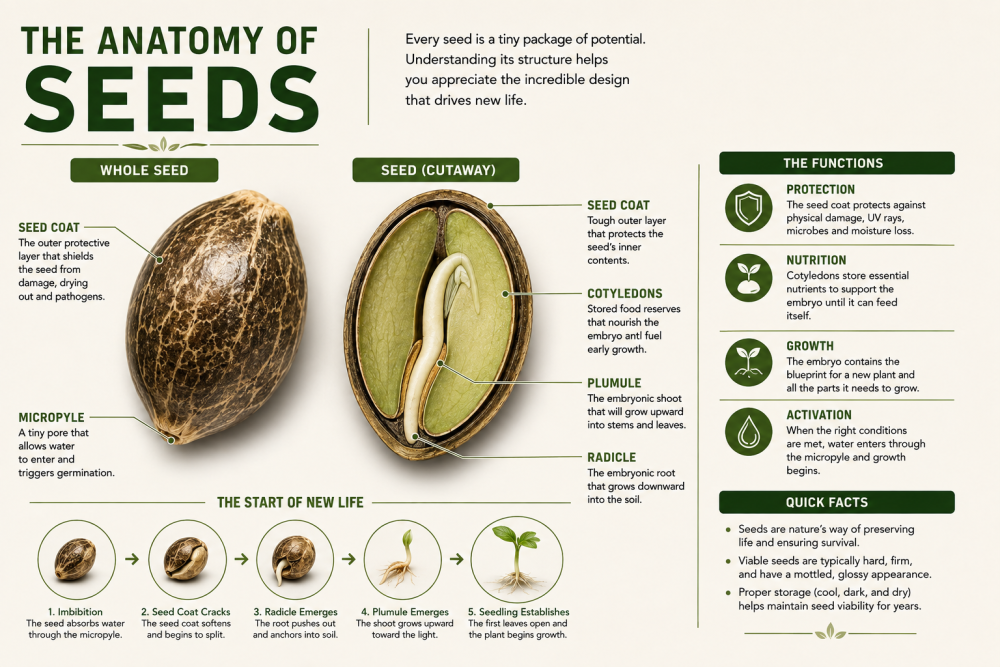
Cannabis Seeds: The Anatomy of Cannabis Seeds.
Understanding Every Part of a Cannabis Seed.
Every cannabis seeds is a remarkable biological package designed to protect and nourish a future plant. Although cannabis seeds may appear small and simple from the outside, they contain several specialised structures that work together to support germination and early growth. Understanding the anatomy of cannabis seeds helps growers appreciate how genetics are protected, why healthy cannabis seeds develop successfully, and what makes high-quality cannabis seeds so valuable.
Cannabis seeds are much more than planting material. Inside every mature cannabis seed is a living embryo surrounded by protective layers and stored nutrients, all carefully designed to give the young plant the best possible start.
This guide explores the anatomy of cannabis seeds, explains the purpose of each structure, and shows why every part plays an essential role in the development of healthy cannabis plants.
Why Understanding Cannabis Seed Anatomy Matters.
Learning how cannabis seeds are constructed helps growers better understand:
Seed maturity.
Germination.
Genetic inheritance.
Seed viability.
Proper storage.
Long-term seed health.
Whether you're buying cannabis seeds or simply interested in plant biology, understanding their anatomy provides valuable insight into how cannabis genetics are preserved.
The outer shell, known as the seed coat or testa, is the first line of defence for cannabis seeds.
Its primary functions include:
Protecting the embryo.
Preventing physical damage.
Reducing moisture loss.
Shielding the seed during storage.
Helping maintain seed viability.
Healthy cannabis seeds usually have a firm, well-developed seed coat that protects the delicate structures inside.
At the centre of every cannabis seed is the embryo.
The embryo is the young plant waiting to develop once suitable germination conditions are present.
It already contains the basic structures needed to begin growth, including:
The embryonic root.
The embryonic shoot.
Seed leaves.
Growing tissue.
Everything required to produce a new cannabis plant is already present within this tiny structure.
Cotyledons are commonly known as the seed leaves.
These specialised structures serve as the plant's first source of stored nutrition immediately after germination.
Their roles include:
Supplying energy.
Supporting early growth.
Nourishing the young seedling.
Assisting the first stages of development.
Once true leaves develop, the cotyledons gradually complete their role.
The radicle is the embryonic root contained within cannabis seeds.
During germination, it is usually the first visible part of the seedling to emerge.
Its responsibilities include:
Anchoring the plant.
Absorbing water.
Taking up nutrients.
Beginning root system development.
A healthy radicle is essential for successful establishment.
The plumule is the embryonic shoot.
After the radicle develops, the plumule begins growing upward towards the light.
It eventually produces:
The stem.
The first true leaves.
Future branches.
The main growing tip.
This structure forms the foundation of the above-ground cannabis plant.
Cannabis seeds contain stored nutrients that support early development before the seedling begins producing its own energy through photosynthesis.
These reserves provide:
Energy.
Carbohydrates.
Proteins.
Essential oils.
Nutritional support during germination.
Without these stored reserves, the young seedling would struggle to survive during its earliest stages.
One of the smallest structures on cannabis seeds is the micropyle.
This tiny opening allows water to enter the seed during germination.
Although almost invisible to the naked eye, it plays an essential role by:
Allowing water absorption.
Initiating germination.
Supporting early metabolic activity.
Once sufficient moisture enters the cannabis seed, germination can begin.
How All the Parts Work Together.
Every structure inside cannabis seeds has a specific function.
The process works like this:
The seed coat protects the embryo.
Water enters through the micropyle.
Stored food reserves activate.
The radicle emerges first.
The plumule grows upward.
Cotyledons support early growth.
True leaves begin photosynthesis.
Each stage depends on the successful function of the previous one.
Healthy Cannabis Seeds vs Immature Cannabis Seeds.
The anatomy of healthy cannabis seeds differs from immature cannabis seeds.
Mature cannabis seeds generally have:
A firm outer shell.
Fully developed embryos.
Complete nutrient reserves.
Good structural integrity.
Greater long-term viability.
Immature cannabis seeds may not have completed these developmental stages.
How Breeders Protect Cannabis Seeds.
Professional breeders work hard to preserve the delicate internal anatomy of cannabis seeds.
This includes:
Harvesting at full maturity.
Careful drying.
Proper cleaning.
Controlled storage.
Protective packaging.
Quality inspections.
These practices help ensure the internal structures remain healthy until germination.
Anatomy of Cannabis Seeds at a Glance.
Part of Cannabis Seeds. Function.
Seed coat (testa). Protects the seed.
Embryo. Develops into the new plant.
Cotyledons. Provide stored nutrition.
Radicle. Forms the first root.
Plumule. Forms the shoot and stem.
Stored food reserves. Supply energy during germination.
Micropyle. Allows water entry.
Common Myths About Cannabis Seed Anatomy.
Several misconceptions exist about cannabis seeds.
Myth 1: Bigger cannabis seeds contain better embryos.
False.
The size of cannabis seeds does not determine the quality of the embryo or future plant.
Myth 2: Dark cannabis seeds are always healthier.
False.
Colour alone does not indicate genetic quality or viability.
Myth 3: The shell is the most important part.
False.
While the seed coat protects the seed, every internal structure is equally important for successful development.
Why Understanding Cannabis Seed Anatomy Helps Growers.
Learning about the anatomy of cannabis seeds helps growers:
Understand germination.
Recognise healthy cannabis seeds.
Appreciate breeder quality.
Improve storage knowledge.
Learn plant biology.
Make more informed purchasing decisions.
Understanding the science behind cannabis seeds makes choosing quality genetics much easier.
Why Learn About Cannabis Seeds at Discount Cannabis Seeds?
Every cannabis seed has a fascinating story, from the breeder who developed its genetics to the biological structures hidden inside its protective shell. Discount Cannabis Seeds combines an extensive selection of premium cannabis seeds with educational resources that help growers understand the science behind every seed they purchase.
Explore Cannabis Seeds With Detailed Genetic Information.
Each cannabis seed listing includes comprehensive information covering:
Genetic lineage.
Parent strains.
Seed type.
Flowering time.
Plant height.
Recommended growing environments.
Breeder background.
This helps growers compare cannabis seeds based on reliable information rather than appearance alone.
Learn the Science Behind Cannabis Seeds.
Discount Cannabis Seeds features a growing collection of articles explaining cannabis seed anatomy, genetics, breeding methods, seed terminology, and cultivation techniques, making it an ideal resource for growers who want to expand their knowledge as well as their collection.
Compare Cannabis Seeds From Leading Breeders.
Browse cannabis seeds from internationally respected breeders, compare classic genetics with modern hybrids, and discover how different breeding programmes have shaped today's diverse cannabis seed market.
Build Knowledge Before Your Next Purchase.
Choosing cannabis seeds becomes much easier when you understand how they're developed, what makes them healthy, and how breeders preserve genetic quality. Discount Cannabis Seeds provides the information needed to help you make confident, informed decisions.
Frequently Asked Questions.
What is the most important part of cannabis seeds?
Every part is essential. The embryo develops into the plant, the seed coat provides protection, the cotyledons supply nutrients, and the radicle and plumule begin root and shoot development.
What is the seed coat on cannabis seeds?
The seed coat, also known as the testa, is the hard outer layer that protects the internal structures of cannabis seeds from damage and moisture loss.
What does the radicle do?
The radicle is the embryonic root contained within cannabis seeds. It is usually the first structure to emerge during germination and develops into the plant's root system.
Why do cannabis seeds contain food reserves?
Stored nutrients provide the energy needed to support early growth until the seedling produces true leaves and begins photosynthesis.
Why should growers understand cannabis seed anatomy?
Understanding the anatomy of cannabis seeds helps growers appreciate seed quality, recognise healthy seeds, understand germination, and make better-informed decisions when selecting cannabis seeds.
Although cannabis seeds appear simple from the outside, they are highly specialised biological structures designed to protect and nourish a future plant. Every component—from the protective seed coat to the tiny embryo and stored food reserves—plays an essential role in ensuring successful germination and early development.
By understanding the anatomy of cannabis seeds, growers gain a deeper appreciation of the science behind cannabis breeding and the remarkable engineering found within every seed. Whether you're collecting genetics or planning your next grow, knowing how cannabis seeds are built helps you better understand the foundation of every healthy cannabis plant.
This article is intended for educational and informational purposes only. Cannabis cultivation laws vary between countries, states, provinces, and local jurisdictions. Before purchasing, possessing, or cultivating cannabis seeds, ensure you understand and comply with all applicable laws where you live. This content does not constitute legal, medical, or cultivation advice.
Molly is a writer specialising in cannabis seeds, plant biology, and cannabis genetics. She researches cannabis seed development, breeding science, and cultivation techniques to create educational articles that help growers better understand the remarkable biology behind modern cannabis seeds.