




Cannabis Seeds: How Cannabis Breeders Create New Cannabis Seeds.
The Complete Guide to Cannabis Seed Breeding and Cannabis Genetics
Every cannabis seed available today is the result of years—and sometimes decades—of careful breeding, selection and genetic preservation. From legendary cannabis seeds such as Northern Lights and White Widow to modern favourites like Gelato, Runtz and Permanent Marker, every new cannabis seed begins with a carefully planned breeding project.
Cannabis breeders combine experience, knowledge and patience to develop new cannabis seeds while preserving valuable cannabis genetics for future generations.
At Discount Cannabis Seeds, we stock thousands of cannabis seeds from trusted breeders, including classic cannabis seeds, feminised cannabis seeds, regular cannabis seeds, auto flower cannabis seeds, F1 cannabis seeds and triploid cannabis seeds.
This guide explains how cannabis breeders create new cannabis seeds and why breeding plays such an important role in the evolution of cannabis genetics.
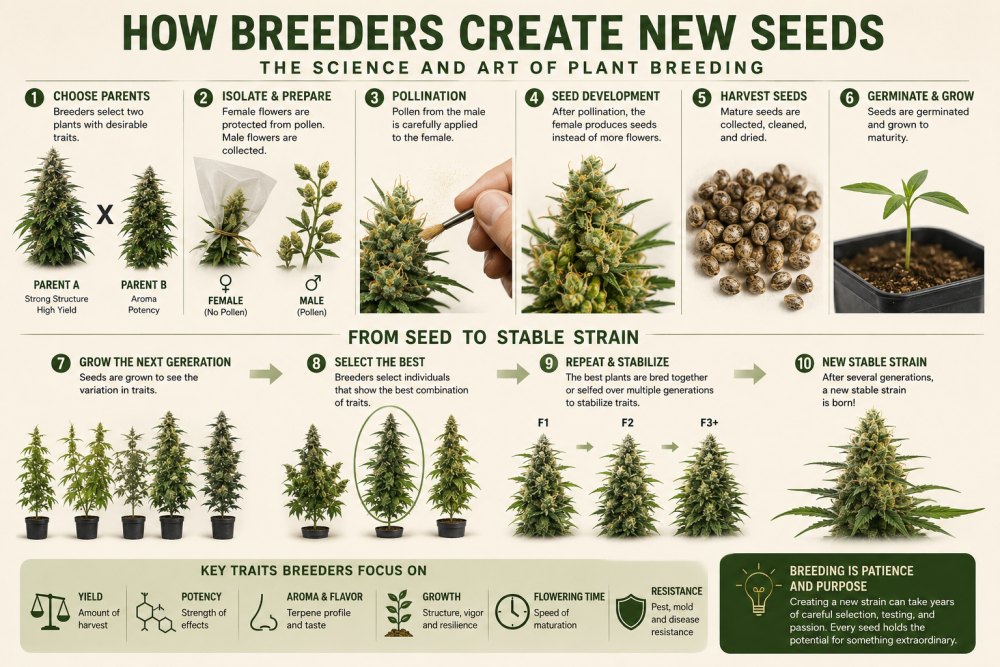
Cannabis breeding is the process of selecting parent plants with desirable inherited characteristics and using them to create new generations of cannabis seeds.
Breeders may aim to:
Preserve historic cannabis genetics.
Combine two established genetic families.
Develop new hybrid cannabis seeds.
Improve genetic consistency.
Introduce new characteristics into future breeding projects.
Modern cannabis breeding has produced thousands of unique cannabis seeds available today.
Without cannabis breeders, many famous cannabis seeds would never have existed.
Breeding has produced legendary cannabis genetics including:
Northern Lights Cannabis Seeds.
White Widow Cannabis Seeds.
Jack Herer Cannabis Seeds.
Gelato Cannabis Seeds.
Runtz Cannabis Seeds.
Wedding Cake Cannabis Seeds.
Gorilla Glue Cannabis Seeds.
Stardawg Cannabis Seeds.
Each represents years of careful breeding and selection.
Step 1 – Choosing Parent Cannabis Seeds
Every breeding project begins with selecting suitable parent plants.
Breeders carefully evaluate cannabis genetics based on characteristics they wish to preserve or combine.
Selection criteria often include:
Stable genetics.
Vigorous growth.
Plant structure.
Flower formation.
Colour.
Aroma profile.
Terpene profile.
Cannabinoid profile.
Disease resistance.
Overall breeding potential.
Finding exceptional parent plants is one of the most important parts of creating premium cannabis seeds.
Step 2 – Studying Cannabis Genetics
Before making a cross, breeders spend considerable time researching the lineage of potential parent plants.
Understanding cannabis genetics helps breeders predict how different genetic families may combine.
Important cannabis families include:
Cannabis Family Famous Cannabis Seeds
Afghan Northern Lights
Kush OG Kush
Skunk Cheese
Haze Super Silver Haze
Chem Chemdawg
Diesel Sour Diesel
Cookies Girl Scout Cookies
Gelato Gelato
Runtz Banana Runtz
Gorilla Gorilla Glue
Many modern cannabis seeds combine genetics from several influential families.
Once suitable parent plants have been selected, breeders carry out controlled pollination.
This process produces a new generation of cannabis seeds that inherit characteristics from both parents.
Each cannabis seed contains a unique combination of genetics.
No two breeding projects produce exactly the same results.
Step 4 – Growing Hundreds of Plants
Creating new cannabis seeds is not simply a matter of making one cross.
Breeders often evaluate hundreds—or even thousands—of offspring produced from a single breeding project.
Every plant is carefully assessed for inherited characteristics.
Step 5 – Selecting the Best Phenotypes
One of the most important jobs of a cannabis breeder is identifying outstanding phenotypes.
A phenotype is the observable expression of a plant's genetics.
Breeders may evaluate:
Structure.
Colour.
Leaf shape.
Branching.
Flower formation.
Resin production.
Aroma.
Terpene expression.
Overall consistency.
Only the most promising plants are usually selected for future breeding.
Step 6 – Stabilising Cannabis Genetics
Creating stable cannabis seeds requires multiple generations of careful breeding.
Breeders repeat the selection process over several generations to produce more consistent genetics.
Stabilisation may take years before cannabis seeds are considered ready for release.
Step 7 – Testing New Cannabis Seeds
Before releasing new cannabis seeds, breeders typically evaluate their breeding projects for consistency and overall quality.
This helps ensure that future seed lots reflect the intended genetic line.
Understanding Cannabis Family Trees
Every modern cannabis seed belongs to a larger family tree.
For example:
Cannabis Seed Parent Lineage
Gelato Cannabis Seeds Sunset Sherbet × Thin Mint Girl Scout Cookies
Runtz Cannabis Seeds Gelato × Zkittlez
Banana Runtz Cannabis Seeds Runtz × Banana OG
Ice Cream Cake Cannabis Seeds Gelato #33 × Wedding Cake
Gorilla Cookies Cannabis Seeds Gorilla Glue × Girl Scout Cookies
Studying family trees helps breeders plan future projects and allows collectors to better understand cannabis genetics.
Preserving Landrace Cannabis Seeds
Breeding is not only about creating new cannabis seeds.
Many breeders also work to preserve historic landrace cannabis seeds.
Important landrace cannabis genetics include:
Afghan Cannabis Seeds.
Durban Poison Cannabis Seeds.
Colombian Gold Cannabis Seeds.
Acapulco Gold Cannabis Seeds.
Thai Cannabis Seeds.
Hindu Kush Cannabis Seeds.
These historic cannabis seeds continue to provide valuable genetic diversity.
Today's cannabis breeders continue developing new cannabis seeds using both traditional selection and modern breeding techniques.
Recent areas of innovation include:
Feminised cannabis seeds.
Auto flower cannabis seeds.
F1 cannabis seeds.
Triploid cannabis seeds.
These developments demonstrate how cannabis breeding continues to evolve.
Famous Cannabis Breeding Successes
Some of the world's most influential cannabis seeds include:
Cannabis Seeds Why They're Important
Skunk #1 Cannabis Seeds One of the first stable hybrid cannabis seeds
Northern Lights Cannabis Seeds Legendary Afghan-based genetics
White Widow Cannabis Seeds Dutch breeding classic
OG Kush Cannabis Seeds Foundation of countless modern hybrids
Girl Scout Cookies Cannabis Seeds Revolutionised modern breeding
Gelato Cannabis Seeds Parent of many California hybrids
Runtz Cannabis Seeds Modern breeding icon
Gorilla Glue Cannabis Seeds Influential contemporary hybrid
These cannabis seeds continue to influence breeders worldwide.
Challenges Faced by Cannabis Breeders
Developing premium cannabis seeds requires:
Patience.
Careful record keeping.
Long-term planning.
Extensive genetic knowledge.
Multiple generations of selection.
Many breeding projects take several years before a new cannabis seed is introduced to the market.
Why Cannabis Breeding Continues to Evolve
Breeders constantly explore new combinations of cannabis genetics.
Goals may include:
Preserving classic genetics.
Expanding existing cannabis families.
Developing new hybrids.
Improving consistency.
Protecting valuable genetic diversity.
As breeding technology advances, collectors can expect to see even more innovative cannabis seeds in the future.
Why Buy Cannabis Seeds from Discount Cannabis Seeds?
Discount Cannabis Seeds stocks one of the UK's largest selections of cannabis seeds from trusted breeders.
Our collection includes:
Feminised cannabis seeds.
Regular cannabis seeds.
Auto flower cannabis seeds.
F1 cannabis seeds.
Triploid cannabis seeds.
Bulk cannabis seeds.
Landrace cannabis seeds.
Modern hybrid cannabis seeds.
Whether you're interested in legendary classics or the latest breeder releases, Discount Cannabis Seeds offers a wide selection of premium cannabis seeds from leading breeders.
Frequently Asked Questions
What does a cannabis breeder do?
A cannabis breeder develops new cannabis seeds by selecting parent plants with desirable genetics and producing new generations through controlled breeding.
How long does it take to create new cannabis seeds?
Many breeding projects take several years, particularly when breeders are working to stabilise new genetics before release.
Why are cannabis genetics important?
Cannabis genetics determine a plant's inherited characteristics and influence future breeding projects.
What are landrace cannabis seeds?
Landrace cannabis seeds are naturally occurring cannabis populations that developed in specific regions without modern breeding.
Do breeders still use regular cannabis seeds?
Yes. Regular cannabis seeds remain an important part of many breeding programmes and genetic preservation efforts.
Meet Molly – Cannabis Genetics Specialist
About the Author
Molly is a Cannabis Genetics Specialist at Discount Cannabis Seeds with over 10 years of experience researching cannabis seeds, breeder history and cannabis genetics. She specialises in explaining how cannabis breeding has evolved and how modern cannabis seeds are developed from historic genetic families.
"Every great cannabis seed represents years of careful planning and selection. While collectors often focus on the finished strain, the real story lies in the breeder's work behind the scenes. Understanding that process gives a much greater appreciation for the cannabis genetics that continue to shape today's premium cannabis seeds."
This article is provided for educational and informational purposes only. Cannabis cultivation laws vary by country, state and region. Readers are responsible for understanding and complying with all applicable local laws. Cannabis seeds sold by Discount Cannabis Seeds are intended for souvenir, collectible and genetic preservation purposes where permitted by law. Always check your local legislation before purchasing or possessing cannabis seeds.