




Cannabis Seeds Naming Guide: How Cannabis Strains Get Their Names.
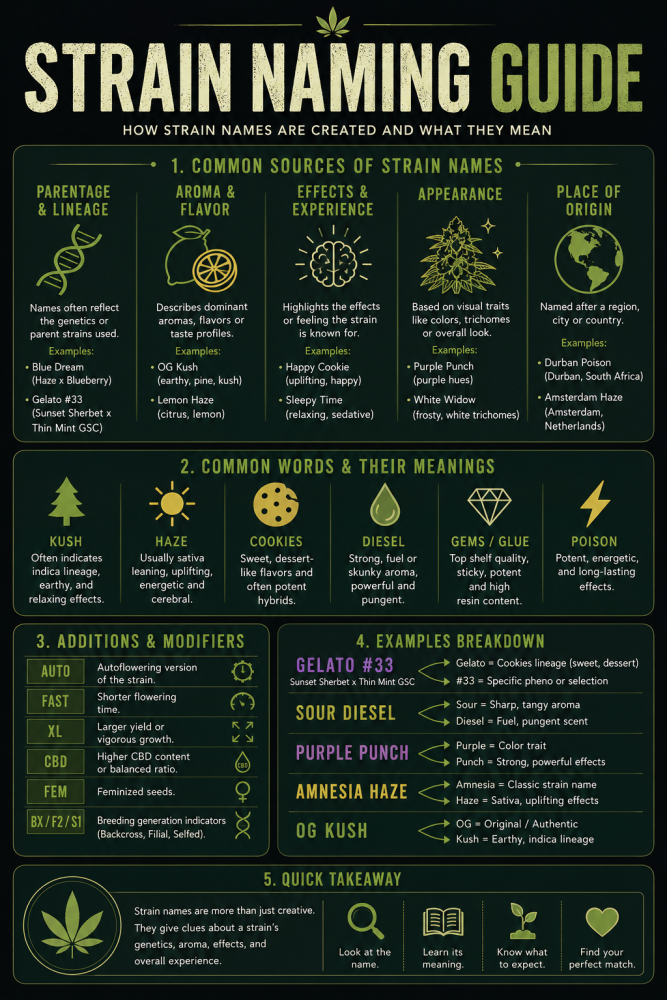
Cannabis strain names often reflect a variety's genetics, lineage, aroma, appearance, breeder, or place of origin. While some names describe a strain's parent genetics, others reference flavours, colours, famous locations, or the breeder's creativity. Understanding how cannabis strains are named can help growers better interpret cannabis seeds, recognise genetic families, and make more informed buying decisions.
With thousands of cannabis strains now available, naming conventions have become increasingly diverse. From legendary classics like Skunk #1 and Northern Lights to modern hybrids such as Permanent Marker and Apples & Bananas, every name tells part of the story behind a strain's development.
In this guide, we'll explain how cannabis strains get their names, explore the most common naming styles, and show how understanding strain names can help you choose the right cannabis seeds.
Why Do Cannabis Strain Names Matter?
A strain's name is often the first clue about its background.
Although a name doesn't reveal everything about a cannabis plant, it can provide useful information about:
Genetic lineage.
Parent strains.
Breeding history.
Aromatic profile.
Geographic origins.
Cannabis family.
Breeder influence.
Learning to recognise common naming patterns makes comparing cannabis seeds much easier.
How Are Cannabis Strains Named?
There is no single worldwide system for naming cannabis strains.
Instead, breeders typically choose names based on one or more of the following:
Parent genetics.
Aroma or flavour.
Plant appearance.
Geographic location.
Individual breeder preference.
Cultural references.
Famous people.
Creative branding.
Many modern cannabis seeds combine several of these approaches.
Cannabis Strains Named After Their Parents.
One of the most common naming methods is combining the names of two parent strains.
Examples include:
A cross between:
The name reflects both sides of its lineage.
Its name highlights several important genetic influences while also describing its distinctive flavour profile.
The name references its banana-inspired characteristics alongside its Punch genetics.
Cherry Pie reflects both its sweet fruit-inspired profile and its well-known hybrid lineage.
Parent-based names help growers identify relationships between cannabis seeds.
Cannabis Strains Named After Flavours or Aromas.
Many breeders choose names inspired by the plant's aromatic characteristics.
Popular examples include:
Bubble Gum.
Orange Bud.
Apple Fritter.
Cereal Milk.
Gelonade.
Biscotti.
Tangie.
Lemon Tree.
Pineapple Express.
Chocolate Mint OG.
These names often reflect terpene profiles that breeders want to highlight.
Cannabis Strains Named After Places.
Some strains are named after the locations where they originated or became famous.
Examples include:
Acapulco Gold.
Durban Poison.
Maui Wowie.
LA Confidential.
SFV OG.
Tahoe OG.
New York City Diesel.
Geographic names often celebrate a strain's heritage or breeding history.
Cannabis Strains Named After Their Appearance.
Visual characteristics sometimes inspire a strain's name.
Examples include:
White Widow.
Black Cherry Punch.
Purple Punch.
Blueberry.
Grape Ape.
Golden Pineapple.
These names often reference colour, trichome coverage, or overall plant appearance.
Cannabis Strains Named After People.
Some breeders honour influential people by naming strains after them.
The most famous example is:
Named after the well-known cannabis activist and author.
Other strains may reference fictional characters, artists, or cultural icons.
Cannabis Strains Named After Numbers.
Numbers can indicate:
Selection numbers.
Breeding projects.
Phenotype identification.
Internal breeder references.
Examples include:
Although the numbers often become part of a strain's identity, they don't always have the same meaning between breeders.
Cannabis Strains Named for Creative Branding.
Modern cannabis breeding has embraced imaginative naming conventions.
Examples include:
Permanent Marker.
Jealousy.
Zoap.
Super Buff Cherry.
Apples & Bananas.
The Soap.
Rainbow Belts.
These names often reflect branding as much as genetics.
What Do Terms Like OG, Kush, Haze and Cookies Mean?
Some words appear repeatedly because they describe entire cannabis families rather than individual strains.
Usually indicates genetic links to OG Kush.
Refers to genetics connected to the Hindu Kush region or Kush breeding family.
Indicates lineage connected to the original Haze family.
Suggests genetic links to Sour Diesel or Chemdawg breeding.
References the hugely influential Girl Scout Cookies family.
Recognising these names helps growers understand cannabis lineage more easily.
Can Two Different Breeders Use the Same Name?
Yes.
Cannabis strain names are not always protected or standardised across the industry.
This means different breeders may release cannabis seeds using the same strain name while working with different parent plants or breeding selections.
For this reason, it is always worth checking:
The breeder.
Parent lineage.
Growing characteristics.
Genetic background.
Reputation.
Understanding breeder information is just as important as recognising the strain name.
How to Read a Cannabis Strain Name.
When comparing cannabis seeds, look for clues such as:
Parent strains.
Famous genetic families.
Geographic references.
Aroma descriptions.
Colour references.
Number designations.
Breeder information.
Together, these details provide a much clearer picture of a strain's background than the name alone.
Common Cannabis Naming Elements.
Naming Style. Example. What It Suggests.
Parent genetics. Blue Dream. Parent lineage.
Aroma. Bubble Gum. Sweet terpene profile.
Fruit. Apple Fritter. Fruit-inspired genetics.
Location. Tahoe OG. Geographic heritage.
Family. Kush Mints. Established genetic family.
Colour. Purple Punch. Plant appearance.
Person. Jack Herer. Tribute to an individual.
Numbers. RS11. Breeding selection or project.
Creative branding. Permanent Marker. Modern breeder branding.
Tips for Understanding Cannabis Strain Names.
When shopping for cannabis seeds, remember:
A name alone doesn't reveal every characteristic.
Always check the breeder.
Review the strain's lineage.
Compare flowering times.
Consider your growing environment.
Look for stable genetics.
Read the full strain description.
This approach helps you make informed decisions when comparing cannabis seeds.
Why Learn About Cannabis Genetics at Discount Cannabis Seeds?
Understanding strain names becomes much easier when you have access to detailed genetic information. Discount Cannabis Seeds provides comprehensive strain pages that go beyond the name, helping growers understand exactly what they're buying.
Compare cannabis seeds from legendary families including Kush, Haze, Diesel, Cookies, Skunk, and many more.
Compare Genetics Side by Side.
Detailed product pages include information on:
Parent strains.
Genetic lineage.
Flowering time.
Plant height.
Indoor and outdoor suitability.
Seed type.
This allows growers to compare cannabis seeds with confidence.
Every cannabis seed comes from recognised breeders known for producing stable, reliable genetics with consistent cultivation performance.
Expand Your Growing Knowledge.
Alongside an extensive seed catalogue, Discount Cannabis Seeds offers educational guides covering cannabis breeding, terpene profiles, famous strain families, cultivation techniques, and buying advice to help growers make informed decisions.
Frequently Asked Questions.
Why do cannabis strains have unusual names?
Breeders often choose names based on genetics, aromas, appearance, locations, cultural references, or creative branding to distinguish new cannabis strains.
Do cannabis strain names tell you the genetics?
Sometimes. Many names include references to parent strains or genetic families, but the full lineage should always be checked.
What does OG mean in a cannabis strain name?
OG usually indicates that a strain is related to the legendary OG Kush genetic family.
Why do some cannabis strains have numbers?
Numbers may refer to breeding selections, phenotype identification, or internal breeder projects, depending on the breeder.
Can two breeders sell strains with the same name?
Yes. Because strain names are not always standardised, it's important to compare breeder information and genetic lineage rather than relying on the name alone.
Cannabis strain names are far more than creative labels. They often provide valuable clues about a strain's genetics, lineage, aromatic profile, and breeding history. Whether a name references legendary parents like Blueberry and Haze, famous locations such as Tahoe or Durban, or modern branding like Permanent Marker and Apples & Bananas, understanding these naming conventions helps growers interpret cannabis seeds with greater confidence.
As cannabis breeding continues to evolve, new strain names will continue to appear. By learning the principles behind cannabis naming, you'll be better equipped to compare genetics, understand lineage, and choose cannabis seeds that match your cultivation goals.
This article is intended for educational and informational purposes only. Cannabis cultivation laws vary between countries, states, provinces, and local jurisdictions. Before purchasing, possessing, or cultivating cannabis seeds, ensure you understand and comply with all applicable laws where you live. This content does not constitute legal, medical, or cultivation advice.
Molly is a cannabis cultivation writer with a passion for cannabis seeds, genetics, and grow education. She researches breeding innovations, cultivation techniques, and emerging cannabis varieties to create practical, informative content for growers of all experience levels. Her goal is to help readers better understand cannabis seeds and confidently choose genetics that match their growing environment and cultivation goals.